Your site, understood
Projects in Pakistan change daily: delivery routes move, materials arrive and parts of the site become quiet after a shift. A monitoring plan should follow those changes and keep escalation clear for your site supervisor.
Site priorities
We connect the camera view with the people who know the site. Your operating routines, priority areas and response contacts shape the service from the beginning.
Coverage with a clear purpose.
We agree the views, checks and responsibilities before monitoring begins. Here is what we plan around your site.
- Focus 01
Materials and equipment
Review storage areas, equipment parking and the routes used for deliveries.
- Focus 02
Changing boundaries
Revisit access points and camera views as construction progresses.
- Focus 03
After-hours activity
Agree on the areas and events that need attention after the workforce leaves.
- Focus 04
Instructions that stay current
Update camera views, site contacts and access arrangements when the layout, staffing or operating hours change.
Benefits
Practical coverage should make the next decision clearer. These are the benefits we build the service around.
Relevant coverage
01
Focus on material storage and the areas that matter at this type of site.
Human attention
02
Operators work with the routines and exceptions defined for your premises.
Clear escalation
03
The right people receive the observations needed to follow up.
A practical setup
04
Cameras, connections and permissions are checked before the service starts.
How we work
A plan built around your site.
From the first conversation to everyday operation, we define the setup and the people responsible at each step.
Construction SitesPakistan Step 01 / 05Understand the location
Share your current site layout and working hours.
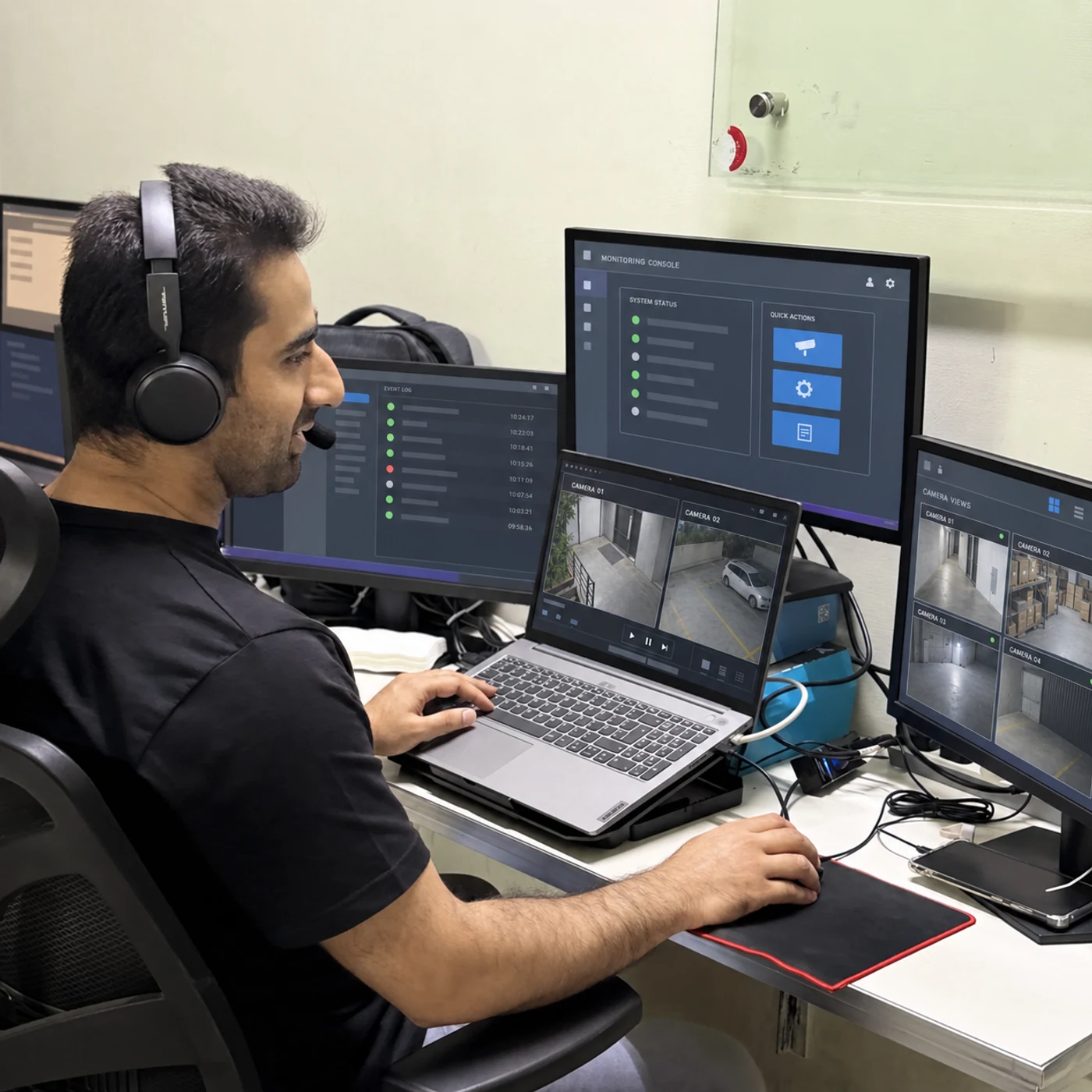
Construction SitesPakistan Step 02 / 05Review the views
Check camera positions, lighting, recording and remote connectivity.
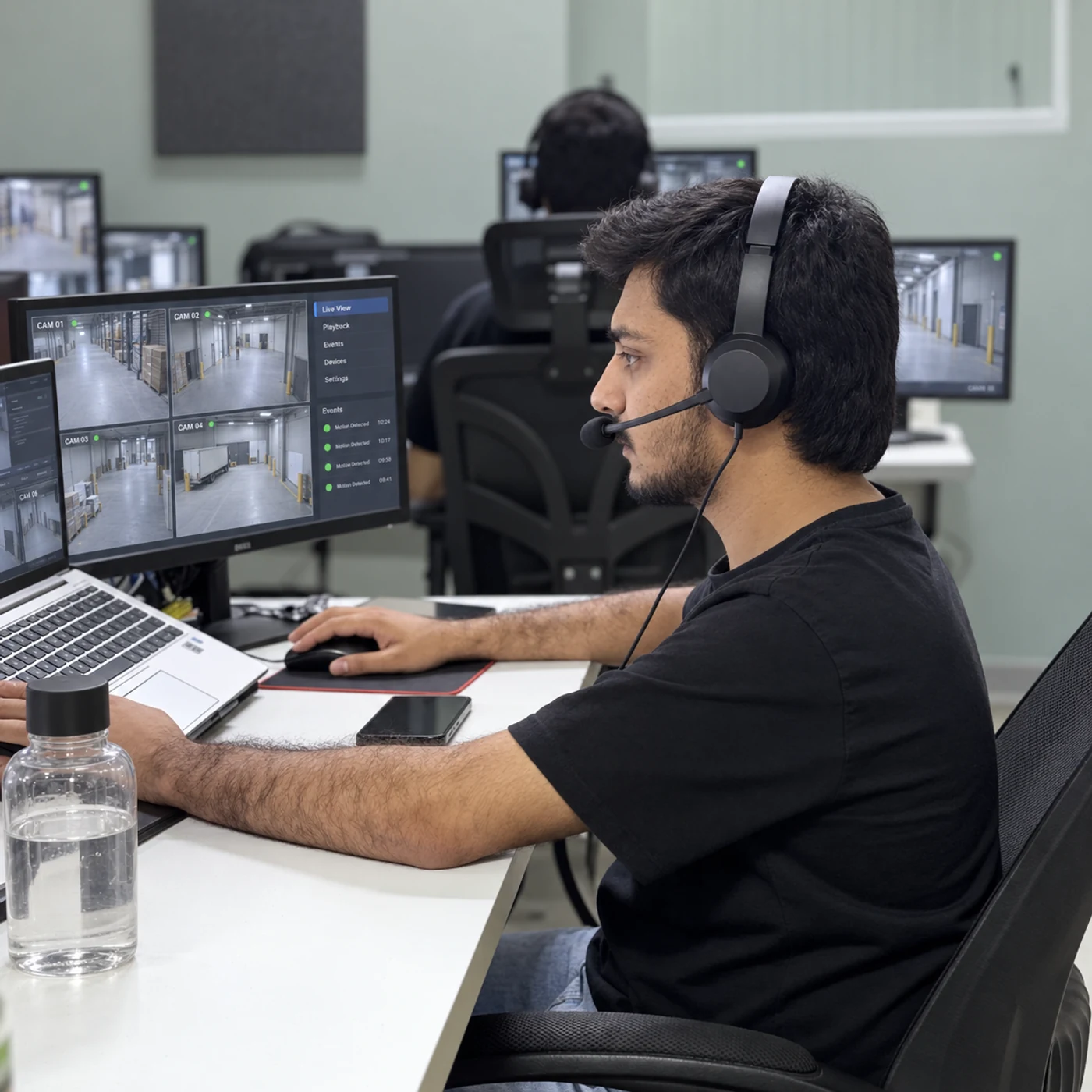
Construction SitesPakistan Step 03 / 05Define the scope
Identify material storage, entrances and the responsible supervisor.

Construction SitesPakistan Step 04 / 05Test the contact chain
Confirm operator instructions, primary contacts and backup arrangements.

Construction SitesPakistan Step 05 / 05Start and keep it current
Review coverage whenever site boundaries or work areas move.
Connected services
Bring the right services together.
- Material storage
- Site entrances
- Plant and equipment
- Changing perimeters
- Material storage
Can we start with existing site cameras?
Yes, begin with a review of the available views, recorder and connection. Gaps and equipment requirements can then be discussed.
Can temporary coverage be considered?
A temporary or mobile option can be assessed against the location, power, connectivity and availability. Confirm arrangements before relying on deployment.
Can the site have continuous monitoring?
Yes. Sentrix provides live operator monitoring 24/7 for the agreed camera views, subject to the site setup and service scope.
Where do you provide this service?
Sentrix provides these services for sites in Pakistan only. Share your city and requirements so we can confirm the delivery arrangements.
Keep exploring
All industries